


Turquoise
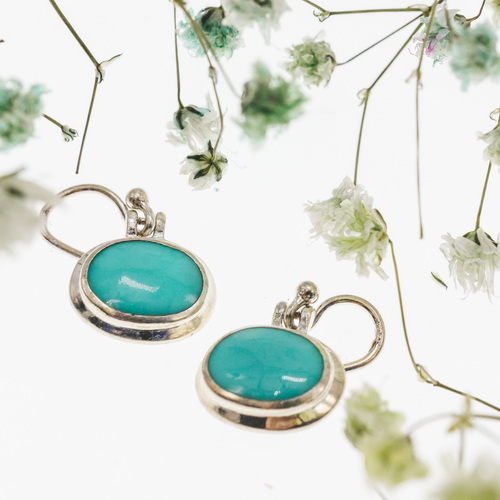
Turquoise: The Enduring Legacy of a Captivating Gemstone
Revered across millennia and steeped in global mythology, turquoise remains one of the world's most captivating and historically significant gemstones. Beneath its striking appearance, the stone is chemically classified as a hydrous phosphate of copper and aluminum—a complex composition that yields its famous, vibrant hues.
A Gemstone of Global Heritage
The cultural impact of turquoise spans continents and eras. It has long been an object of deep veneration:
-
The Americas: Indigenous peoples of North America and Mesoamerica held the stone in the highest regard. To date, archaeologists have unearthed more than 50,000 turquoise artifacts from ancient ceremonial and burial sites.
-
The Middle East: Turquoise is deeply woven into the fabric of Islamic culture and history, with historical accounts describing ancient turquoise nuggets intricately inscribed with legends of the Prophet Muhammad.
-
Iran: Serving as the proud national stone of Iran, turquoise has historically been prized by the culture as an asset far more valuable than gold.
The Gold Standard of Turquoise
Historically, the global benchmark for this gemstone has been set by the Khorasan province in Iran, renowned for yielding what is widely considered the finest turquoise ever discovered.
From a gemological perspective, the most valuable and highly sought-after specimens exhibit a pure, vibrant blue. This specific coloration is no accident; it occurs only when the stone is rich in copper and entirely devoid of iron. Furthermore, this premium blue turquoise boasts an incredibly dense structure that naturally resists weathering, making it the perfect, enduring centerpiece for fine jewelry.