


Ruby - a symbol stone
The Crimson Enigma: Exploring the Legacy and Science of the Ruby
Long revered as the "King of Gemstones," the ruby is a stone steeped in profound symbolism. For centuries, its captivating crimson hue has been universally associated with passion, vitality, and longevity. However, beyond its romantic allure lies a fascinating intersection of history, chemistry, and gemology.
A Balance of Ultimate Hardness and Inherent Fragility
The ruby is a remarkably robust gemstone, boasting a 9 on the Mohs scale of mineral hardness—second only to the diamond. A simple testament to its extraordinary durability is its ability to effortlessly carve a deep scratch into solid glass.
Yet, the ruby harbors a structural paradox. The very element that gives the gemstone its spectacular red color—chromium—also disrupts its crystal lattice. This makes the stone inherently fragile and prone to natural fractures and inclusions. To combat this and preserve the stone's structural integrity, modern gemologists and jewelers often employ specialized treatments, such as fracture-filling with specialized glass compounds, to reinforce the ruby and enhance its natural beauty.
Historical Identity Crises
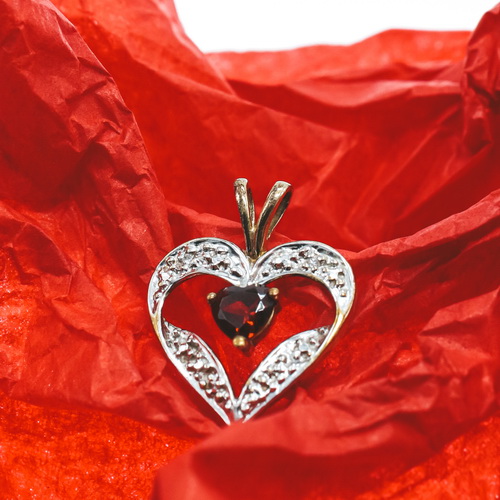
The market for antique jewelry is filled with magnificent red centerpieces traditionally labeled as rubies. However, before the advent of modern gemological testing, jewelers and royalty alike lacked the scientific means to accurately classify gemstones. As a result, they frequently mistook other vibrant red stones—most notably garnets and spinels—for rubies. Because of this historical conflation, securing a professional appraisal is essential when evaluating antique pieces to verify the true mineral composition of the stones.
The Dawn of Synthetics and the Magic of Luminescence
The scientific fascination with rubies led to a major breakthrough in 1837 when French chemist Marc Antoine Gaudin successfully synthesized the first artificial ruby crystals. This milestone revolutionized the jewelry industry, paving the way for a highly popular market in accessible, lab-grown gemstones.
Whether natural or synthetic, rubies possess a mesmerizing physical trait: luminescence. When exposed to ultraviolet (UV) or infrared (IR) light, the chromium atoms within the crystal structure become highly excited, causing the gemstone to emit a brilliant, glowing fluorescence. A simple UV lamp is all it takes to witness this captivating inner fire.
Legendary Stones
Nature has produced some truly monumental rubies throughout history. Among the most distinguished is the magnificent Edwards Ruby. Weighing an astonishing 167 carats, this exceptional gemstone stands as one of the largest natural rubies in the world and is proudly housed in the historical collections of the British Museum.