


Opal
The Allure of Opal: From Roman Exiles to Royal Endorsements
Derived from the ancient languages, the word "opal" translates beautifully to "striking the eye"—a fitting moniker for a gemstone that has captivated humanity for millennia.
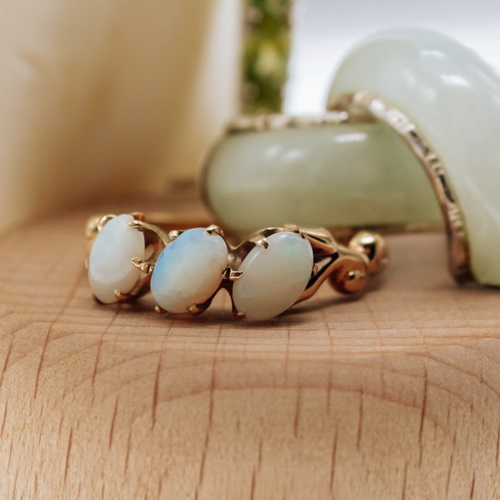
What truly sets the opal apart is its signature optical phenomenon: opalescence. When bathed in light, the stone comes alive, revealing a mesmerizing kaleidoscope of iridescent and pearlescent hues. This dynamic "play-of-color" makes every single opal entirely unique.
A Jewel Worth Exile
The hypnotic allure of the opal is so powerful that it once altered the course of Roman history. Ancient records tell the tale of Senator Nonius, who possessed an opal of unrivaled size and beauty. The Roman triumvir Mark Antony became so intensely envious of this treasure that he demanded it for himself. Faced with the loss of his prized gem, Nonius chose exile over surrender, fleeing his homeland with his beloved opal safely hidden away.
The Science of the Sparkle
Beyond its dramatic history, the opal's physical composition is fascinating to gemologists. Unlike traditional crystalline gemstones, opal is an amorphous, hydrated form of silica. What surprises many is its high moisture content—these brilliant stones can contain up to 20% water, quite literally holding an ocean of light and color within.
The World's First Jewelry PR Campaign
Today, the world's finest opals are famously sourced from the rich deposits of Australia, but the stone hasn't always enjoyed mainstream popularity. During the 19th century, unfounded superstitions and dark folklore caused the public to fear the gem. Countless antique pieces were discarded or locked away, dismissed as unlucky.
Enter Queen Victoria. Recognizing the economic potential of the newly discovered opal mines in her Australian colony, the monarch launched what might be considered the world's first royal public relations campaign. To dispel the myths, Queen Victoria began prominently featuring opals in her own personal collection, wearing them in exquisite necklaces, earrings, and rings. Her courtiers and the broader public quickly followed suit, single-handedly resurrecting the opal's reputation and cementing its status as a staple of high fashion.
From steadfast Roman senators to British royalty, the opal has always demanded attention and admiration. Does this captivating, history-rich gemstone have a place in your jewelry wardrobe?
⠀