


Facts about jewelers
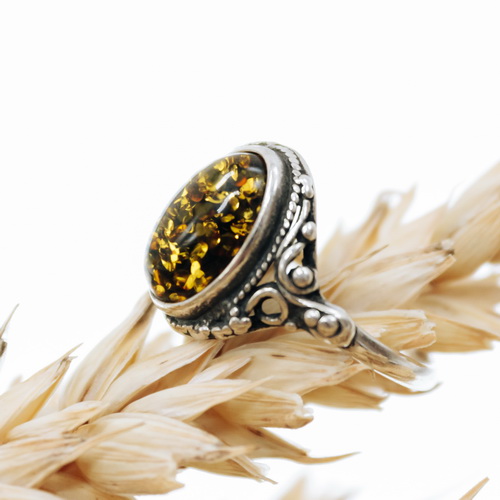
The Art of the Jeweler: A Legacy of Precision, Patience and Prestige
Rooted in ancient history—with linguistic ties to a Turkic phrase meaning "able to engrave"—the role of the jeweler is recognized as one of the world's oldest and most revered professions. Long before modern fashion, jewelry carried profound sacred significance. In fact, some of the earliest known crafted adornments were unearthed during the excavation of the pyramids of the Egyptian Pharaoh Djoser, proving that humanity's fascination with precious stones and metals has endured for millennia.
The craft has always held an esteemed place across different cultures and eras. In Ancient Russia, jewelers were celebrated as masterful artisans, guided by their Orthodox patron saints, Damian and Cosmas. Meanwhile, in the Catholic tradition, Saint Dunstan watches over those who dedicate their lives to this meticulous art.
A Lineage of Craftsmanship
Historically, jewelry-making is a hereditary calling. The secrets of the workbench—delicate techniques, material knowledge, and design philosophies—are frequently passed down from generation to generation. A striking example of this enduring tradition can be found in the Moroccan city of Tiznit, where legendary dynasties of jewelers have been crafting exquisite pieces for centuries, preserving their ancestral skills in every setting and polish.
The Tragedy and Triumph of Fabergé
When discussing jewelry royalty, one name stands above the rest: Peter Carl Fabergé. Even to those entirely outside the gemstone industry, the Fabergé name is synonymous with unparalleled luxury.
His legacy began in 1885 when he created his first iconic, jewel-encrusted egg as an Easter gift for the wife of Tsar Alexander III. Today, collectors value these masterpieces astoundingly high, with his most expensive Imperial egg fetching a staggering $18.5 million at auction. Yet, Fabergé’s personal story is a tragic one; following the Russian Revolution of 1917, the legendary creator's property was seized, forcing him to flee the country and ultimately pass away in poverty.
The Modern Master: What It Takes
Precious jewelry is immune to the fleeting nature of trends; it will always be in vogue. Consequently, the profession remains highly respected and is considered one of the most lucrative artisanal careers in the world. However, earning the title of a master jeweler requires a rare combination of traits:
-
Boundless Imagination: To conceptualize and design truly exclusive, one-of-a-kind pieces.
-
Scientific Precision: A deep, practical understanding of chemistry and metallurgy to manipulate complex materials.
-
Mathematical Accuracy: To perfectly calculate cuts, weights, and structural integrity.
-
Flawless Vision: Keen eyesight is non-negotiable when working with microscopic details.
Beyond hard skills, a jeweler's temperament is their most vital tool. Hot-tempered or impatient individuals simply cannot survive in this field. Because the work is incredibly meticulous and involves handling exceptionally expensive materials, a calm, unshakable demeanor is required. In many regions, the vetting process for apprenticeships is so strict that candidates must undergo formal evaluations by psychologists and medical professionals. This ensures they possess the necessary emotional balance and focus to withstand the immense pressure of the craft.
Ultimately, to be a jeweler is to be part scientist, part artist, and part historian—shaping the earth's most precious materials into timeless works of art.