


Chrysolite
The Allure of Chrysolite: F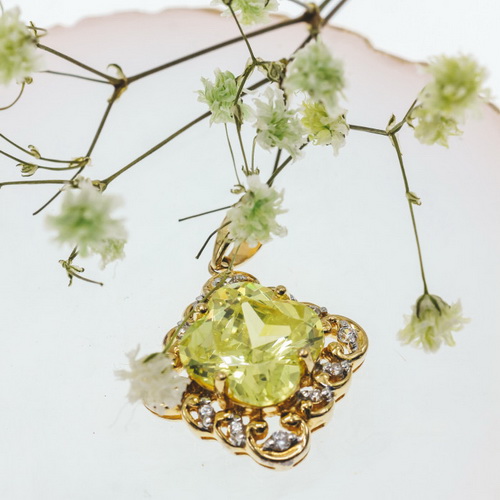 rom the Earth's Core to Fine Jewelry
Known interchangeably as chrysolite, peridot, and olivine, this striking green gemstone boasts a rich and fascinating legacy. While it may go by several names, its distinct beauty has captivated humanity for over two millennia.
Here is a closer look at what makes this ancient gemstone so remarkable:
A Rich Historical Lineage
Chrysolite’s historical homeland is ancient Egypt, where it has been mined and treasured in jewelry for over 2,000 years. While its Egyptian roots are legendary, the modern supply of this radiant stone is primarily unearthed in the mountainous terrains of Pakistan, Myanmar (Burma), and China.
The Paradox of Rarity
From a geological standpoint, the stone presents a fascinating paradox. Its mineral counterpart, olivine, makes up nearly 50% of the Earth’s upper mantle. Yet, despite this sheer abundance, gem-quality chrysolite remains exceptionally rare.
Most naturally occurring olivine is opaque and hidden away inside ordinary, nondescript rocks. It is only under precise, extraordinary conditions that the mineral crystallizes into the transparent, highly valued jewelry-grade gemstone we covet today.
A Testament to Natural Authenticity
In an era where lab-created gems are increasingly common, chrysolite stands apart. It is entirely a product of nature; to date, synthetic or lab-grown chrysolite does not exist.
For gemologists and collectors, this makes authentication incredibly straightforward. The most reliable way to verify a genuine chrysolite is by examining its internal structure under magnification. True chrysolite features unique, natural inclusions—microscopic "birthmarks" that serve as an irrefutable signature of its authentic, earthy origins.